
From Idea to Income: Winning in the AI Boom
We’re living through one of the most exciting and overwhelming shifts in tech history.
Every day, a new AI tool is launched. Every week, a new LLM drops. Everyone’s talking about “AI disruption”… but very few people are talking about where the money actually is.
If you’re a builder, founder, or indie hacker trying to create something meaningful (and profitable) in the AI space, this post is for you.

The image I created with GPT-5
The AI Landscape Is Noisy, But the Opportunity Is Real
Foundational models like GPT-5, Claude, Mistral, and LLaMA are now widely accessible. The infrastructure is no longer the barrier; the hard part is differentiation.
In this new world, everyone has the same models. So what sets you apart? 👉 It’s not the model. It’s the problem you solve.
We don’t need another AI chatbot. We need AI products that actually do work, tools that save time, reduce cost, or increase clarity in high-value workflows.

Photo by Jon Tyson on Unsplash
So Where’s the Money?
From what I’ve seen, AI monetization falls into 3 proven categories:
1. AI-as-a-Service
You offer capabilities (like summarization, transcription, or data extraction) via API, typically usage-based. Think of this as “AI infrastructure for others.”
2. AI-Native SaaS
You build vertical apps where AI is at the core. Examples: legal contract analyzers, market research copilots, or AI spreadsheet tools.
3. AI Inside Workflows
You don’t replace tools, you upgrade them. Like prioritizing customer support tickets or summarizing bug reports within existing dashboards.
Each model can work; the trick is picking the right wedge.

Photo by Alexander Grey on Unsplash
What Not to Build (Please)
Let’s save you some heartache. These patterns almost never work:
- ❌ A generic ChatGPT wrapper with a slightly better UI
- ❌ A productivity assistant that tries to be everything for everyone
- ❌ Projects that launch without knowing who will pay or why
You don’t need to build something “AI-powered.” You need to build something valuable.

Photo by John Matychuk on Unsplash
What You Should Build: 4 Smart Bets
Here are 4 high-leverage directions with real demand:
1. Memory + Recall Tools
Think of tools that help teams remember key decisions buried across Slack, Notion, and Google Docs, like an AI knowledge base.
2. Niche AI Agents
Think: an AI that reviews legal docs and flags red flags, or an AI that validates financial models. Specialists will gladly pay to save time and reduce risk.
3. Internal AI-Powered Tools
Workflow accelerators like:
- Bug triage bots
- Resume screeners
- Insight aggregators for product feedback
4. Data Cleaning / Labeling / ETL Helpers
Unsexy? Maybe. Profitable? Absolutely. Companies spend real money making their data usable.

Photo by Michael Myers on Unsplash
Who’s Paying for AI Right Now?
Follow the money:
- 🧑💼 Startups want speed and leverage.
- 🏢 Enterprises want cost savings and compliance.
- 👩🏫 Experts & consultants want faster insight and summaries.
They’re not buying models. They’re buying outcomes.

Photo by Jonas Leupe on Unsplash
The Lean AI MVP: How to Actually Start
Don’t overbuild. Here’s the playbook:
- Pick a narrow problem.
- Build a simple loop: Input → AI → Output.
- Ship fast and validate these 3 things:
- Is this painful?
- Does AI meaningfully help?
- Will they pay even a little?
No need for fancy UI or perfect auth flows. Just ship something that proves value.
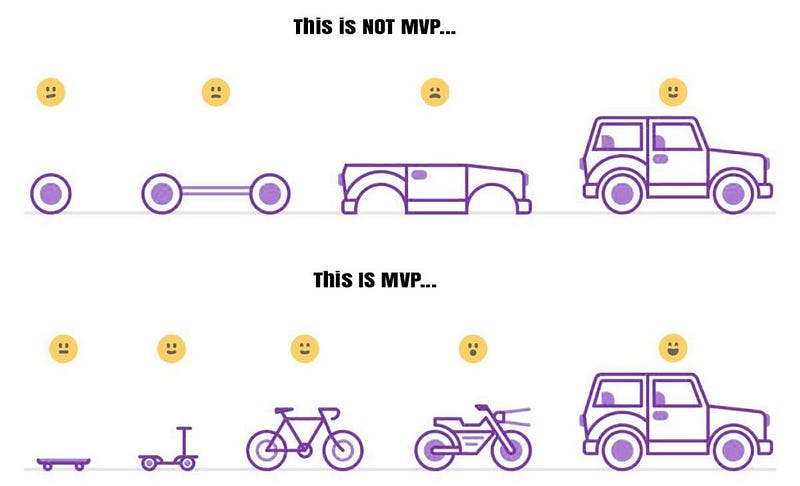
Image from Google search
Case Studies: AI That Works
- LegalGPT: Flags risky clauses in contracts. Law firms pay $200+/mo/seat.
- AI Logistics Tool: Optimizes package routing. Saved one company 5 figures/month.
- Support Copilot: Auto-responds to FAQs and routes tickets. Reduces headcount or increases coverage.
They all solve a real problem, with measurable value.

Photo by Jason Goodman on Unsplash
Biggest Mistake? Chasing the Model
I’ve seen too many founders chasing GPT-5 rumors or fine-tuning obsession.
Your users don’t care.
They don’t ask “Is this using OpenAI or Claude?” They ask “Did this save me time? Did it help me make a decision faster?”
That’s what you’re selling.

Photo by Solen Feyissa on Unsplash
Final Thoughts: What It Takes to Win
To thrive in the AI era, you don’t need to be a researcher or model builder. You need to:
- ✅ Solve a painful problem
- ✅ Ship fast and learn
- ✅ Sell outcomes, not models
This moment is massive, but it rewards clarity, not complexity.
So don’t wait for GPT-5. Ship something useful today.

Photo by Jakob Owens on Unsplash
Enjoyed this? Clap if this sparked ideas for your own AI project. Leave a comment: What are you building in the AI era?
I’m Mikel, and follow me for more breakdowns on real, practical AI products.