
From Vibe Coding to One-Person Empires: 7 Surprising Truths About the 2026 AI Revolution

Photo by Matilda Alloway on Unsplash
1. Introduction: The Death of the “Weekend Project”
In 2024, we were obsessed with AI hype; in 2026, we are defined by sovereign execution. Remember the paralyzing frustration of the “blank page” — that blinking cursor mocking your lack of technical syntax or creative momentum? That barrier has officially dissolved. We are witnessing the end of the “Technical Co-Founder” requirement.
Today, a 21-year-old with a clear vision can launch a functional, revenue-generating app in a single afternoon. The “weekend project” is dead because a weekend is now an eternity in the world of rapid prototyping. While legacy corporations are still drowning in “pilotitis” and bureaucratic inertia, solo builders are leveraging agentic squads to build what I call “Nano-Unicorns.” This isn’t just a change in toolsets; it’s an economic inversion where individual imagination is the only bottleneck remaining.

Photo by Microsoft 365 on Unsplash
2. Takeaway 1: “Vibe Coding” is Replacing Syntax
“Vibe Coding,” a term famously coined by Andrej Karpathy, has matured from a niche experiment into the dominant development paradigm. It is the final shift from traditional programming to “conversational development.” You no longer write code; you “prompt” an application into existence by describing your vision in plain English.
Platforms like Windsurf, Cursor, and LovableDev have turned software development into a democratization cycle similar to photography: we moved from darkrooms to digital cameras, and finally to Instagram filters. Now, anyone is a “developer.”
- Syntax is secondary: Natural language now generates 60% of all new code.
- Domain Experts are the new Architects: Doctors, marketers, and retailers are building their own bespoke software tools without learning Python.
“Building something functional is easy. Anyone with access to AI, no-code tools, or open-source software can launch a product in days. But standing out? Being remembered? Creating loyalty? That’s hard… That’s the edge.”
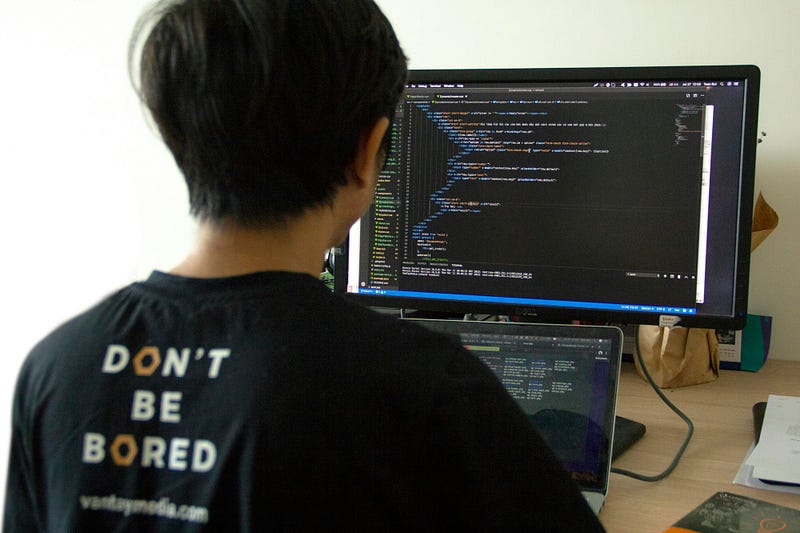
Photo by Van Tay Media on Unsplash
3. Takeaway 2: Sales Agents are Teammates, Not Chatbots
By 2026, the era of the script-based chatbot is over. We have moved to Agentforce environments powered by reasoning engines like Atlas. These are not bots; they are autonomous software entities that act as goal-directed collaborators.
They operate via a sophisticated closed-loop system:
- Perceive: Ingest intent from inbound leads and live CRM data.
- Plan: Use the Atlas engine to reason through complex multi-step objectives.
- Act: Execute tasks across tools — sending emails, booking calendar invites, or updating Salesforce records.
- Reflect: Analyze outcomes and update their long-term vector memory for future interactions.
This provides 24/7 responsiveness and, more importantly, “Consistent Data Hygiene.” Agents enforce tagging rules and lead scores autonomously, ensuring your pipeline never rots.

Photo by Jakub Żerdzicki on Unsplash
4. Takeaway 3: The Rise of the Solo “Nano-Unicorn”
The most disruptive data point of 2026 is the collapse of the “Revenue to Employee” ratio. Traditional economies of scale are being obliterated by “economies of AI leverage.” As Anthropic’s CEO predicted, billion-dollar companies are now being run by skeleton crews — or even individuals.
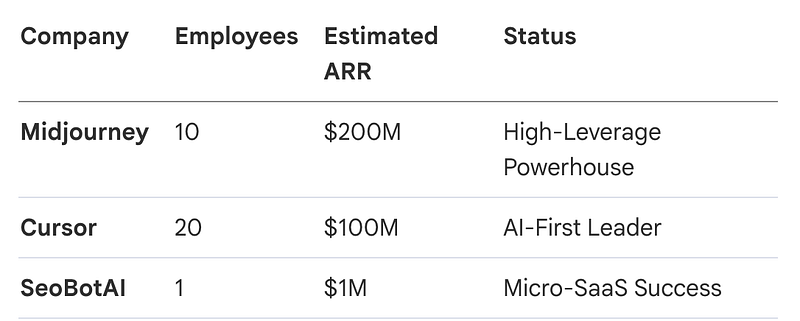
When AI handles the bulk of heavy lifting — from coding to customer success — the need for human bureaucracy evaporates, allowing “Nano-Unicorns” to maintain 90%+ profit margins.

Photo by Sudan Ouyang on Unsplash
5. Takeaway 4: Specialized “Squads” Overpower Single-Prompt Agents
The mistake many made in 2025 was trying to build a “god-bot” — a single massive prompt that tried to do everything. These systems inevitably failed because the context window would fill up, causing reasoning to fracture and quality to degrade.
The winning architecture of 2026 is the “Squad.” This mimics a real-world team where specialized agents maintain distinct “energies” and roles:
- Monica (Chief of Staff): Possesses “Geller energy” — highly organized, competitive, and exacting. She coordinates delegation.
- Kelly (Marketing): Fueled by “Kapoor energy” — she knows what’s trending before it trends and crafts viral content.
- Dwight (Research): The intelligence backbone.
“Dwight [Research] shares his intensity: thorough to a fault, knows EVERYTHING in your domain, takes your job extremely seriously. No fluff. No speculation. Just facts and sources.”
By assigning single, “boring” job titles to specific agents, you maintain high-fidelity output that never suffers from the “mediocre at everything” trap.

Photo by Compagnons on Unsplash
6. Takeaway 5: The Filesystem is the New Integration Layer
While the world expected complex AI middleware, the most robust teams are built on “Unwind AI” principles: total technical simplicity. Instead of fragile API integrations that break under heavy load, the gold standard is now the “one-writer, many-readers” pattern using Markdown and JSON files.
In this architecture, a Research Agent (like Dwight) writes findings to a DAILY-INTEL.md file. The content agents (Kelly or Rachel) simply read that file and execute.
- Self-Healing: Files don’t crash.
- No API Friction: This system bypasses API rate limits and the need for complex authentication tokens.
- Transparency: It creates a readable, auditable “single source of truth” on a simple disk.

Photo by Mota Ehdaei on Unsplash
7. Takeaway 6: “Human-in-the-Loop” (HITL) is the Secret to 99.9% Accuracy
Speed is a commodity; trust is a moat. AI-only systems typically hover at 92% accuracy, which is a disaster in high-stakes environments like healthcare or finance. The secret to reaching 99.9% is Human-in-the-Loop (HITL) oversight, often implemented through MindStudio “checkpoint blocks.”
Strategic builders use three models of oversight:
- HITL (Direct Review): Humans must approve an action (like a $50k deal) before the agent executes.
- HOTL (Human-on-the-Loop): Supervisory monitoring where humans intervene only during anomalies.
- HIC (Human-in-Command): High-level strategic goal setting.
By using “human-verified AI,” you turn accuracy into a brand asset.

8. Takeaway 7: The “Vibe” is the Only Defensible Moat Left
In a world where code and capital are commodified, your old moats are useless. Having 500 engineers is now a liability — it’s just 500 people moving slower than a single “Vibe Coder.”
When functionality is free, people buy Brand, Community, Aesthetics, and Narrative. We have shifted from shipping code to “shipping culture.” Loyalty in 2026 is no longer logical; it is emotional.
“In a vibe economy, loyalty isn’t logical; it’s emotional. Success comes from the vibe you build around the product.”
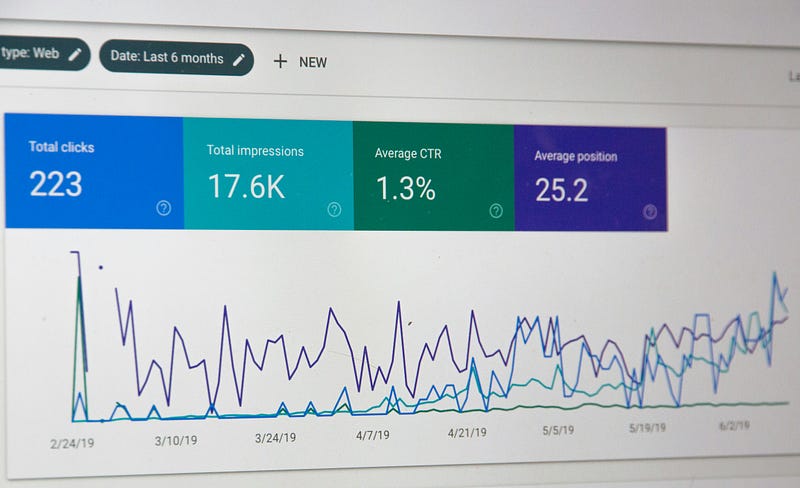
Photo by Stephen Phillips - Hostreviews.co.uk on Unsplash
9. Conclusion: The Compound Effect of Starting Small
The 2026 AI revolution isn’t about the model you use; it’s about the system you build while you sleep. The path to a one-person empire is a deliberate, sequential roadmap:
- Week 1: Launch one agent (like Monica) for one specific, painful job. Use MindStudio to set up your first checkpoint.
- Week 2–3: Add a memory layer. Give your agent feedback so its long-term vector memory sharpens.
- Week 4: Add a second agent (like Dwight) and connect them via the filesystem integration.
The technology has receded into the background. Your imagination and your ability to lead a digital team — rather than just use a tool — is now the primary bottleneck. Stop staring at the blank page. Start building your squad.
Hey, I’m Mikel, and you can *read more of my stories here*.