
Part 2: The Explosion of AI Models After ChatGPT

When ChatGPT launched in November 2022, it not only ushered in a new era of artificial intelligence (AI), but also ignited a competitive fire in the tech industry.
I witnessed how major companies like Google, Meta, Anthropic, and xAI quickly responded with advanced models, from Gemini, Llama, Claude to Grok. In just three years, from 2022 to July 2025, the AI landscape has changed dramatically, with models becoming more powerful, versatile, and accessible.
This article will explore the explosion of AI models after ChatGPT, highlight the notable innovations, and explain why this race is shaping the future of technology, as introduced in Article 1: ChatGPT — The Fire That Opened the Modern AI Era.
From ChatGPT to the New Wave of Models
The success of ChatGPT, as mentioned in Part 1, comes not only from its natural conversational ability but also from bringing AI to the hands of ordinary users. According to statistics, ChatGPT reached 100 million users in just two months (Source: Reuters, 2023). This achievement has put a lot of pressure on tech giants and startups to accelerate the development of competing AI models.
Between 2023 and 2025, a series of new models emerged, each bringing its own improvements.
- OpenAI continued to lead with GPT-4 and GPT-4o, while Google introduced the Gemini series (including Gemini 2.5 Pro and Flash).
- Meta focused on open source with Llama, while Anthropic launched Claude with a focus on safety.
- xAI, a company with a mission to accelerate scientific discovery, brought Grok, deeply integrated into the X platform.
These models compete not only on performance but also on practical applications, from coding, image generation, to video analysis.
Notable Models and Improvements
Each AI model after ChatGPT has its own strengths, reflecting the strategies of the companies behind them.
OpenAI has upgraded from ChatGPT to GPT-4 (2023) and GPT-4o (2024), focusing on multimodal capabilities. GPT-4o can process text, images, and even create creative content such as graphic design or data analysis (Source: OpenAI Blog, 2024). In my work, I have used GPT-4o to analyze image revenue charts, a feature that the original ChatGPT could not do.
GPT-4o
Google, with the Gemini line, aims to integrate AI into its ecosystem, from Google Search to Google AI Studio. Gemini 2.5 Pro, released in 2024, is optimized for both text and images, with superior performance in tasks like programming and data analysis (Source: Google AI Blog, 2024).
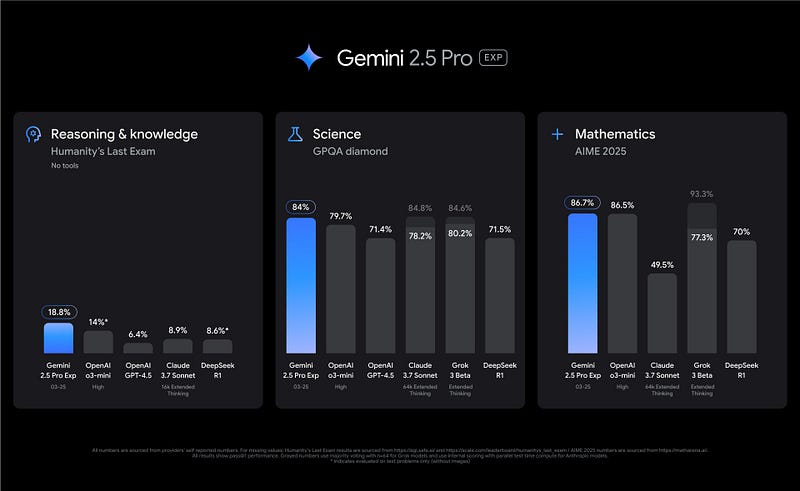
Gemini 2.5 Pro
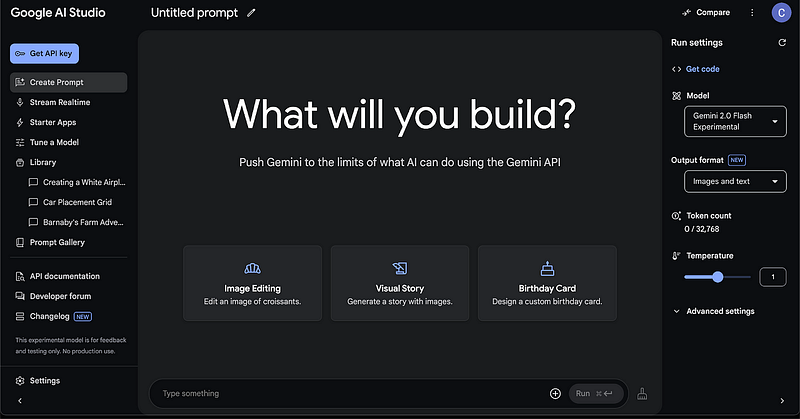
I found Gemini particularly useful when my team needed to quickly create web applications using Google AI Studio, a free platform that we’ll explore further in *“Part 9: Creating Content with AI: Marketing and Communications”*.
Meta, with Llama, took the open-source route. Llama 3 (2024) is designed for developers to customize for specific applications, from enterprise chatbots to scientific research. This helps Meta appeal to the developer community, but it limits the user interface (Source: Meta AI Blog, 2024).
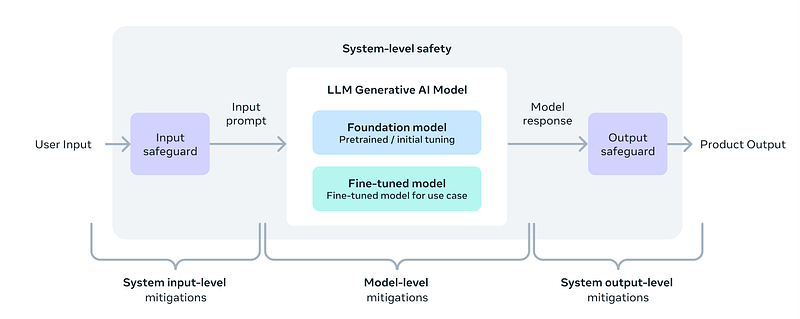
LLAMA 3 — A system-level approach to responsibility
Anthropic, founded by former OpenAI researchers, launched Claude with a focus on safety and ethics. Claude 3.5 (2024) is highly regarded for handling sensitive questions and avoiding controversial content (Source: Anthropic, 2024).
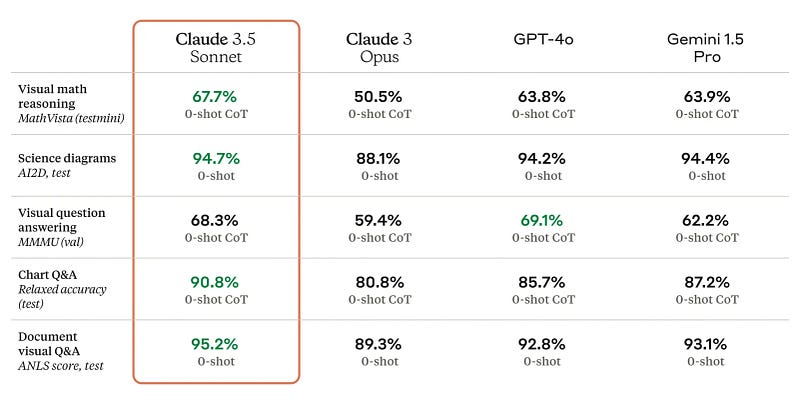
Claude 3.5 performance compared to other models in the released time
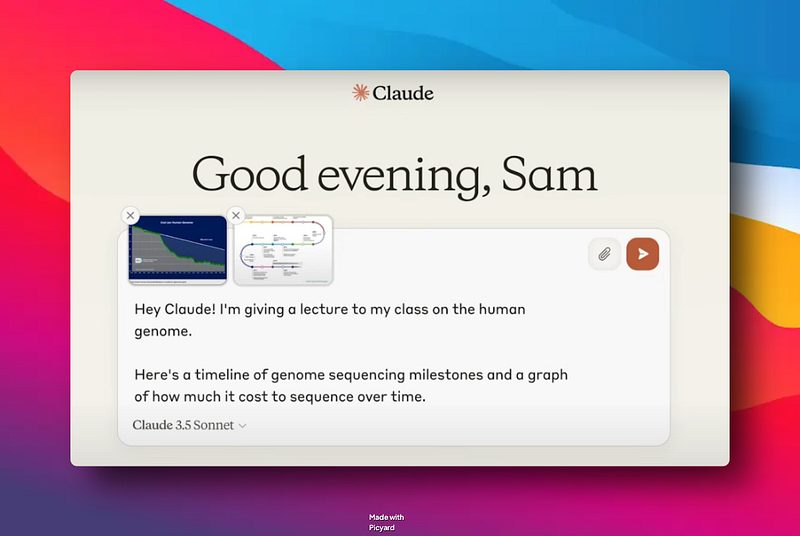
One example of Claude 3.5 application
Later, Anthropic also introduced Claude Sonnet 4 and Claude Opus 4.
Claude Opus 4 is the world’s best coding model, with sustained performance on complex, long-running tasks and agent workflows. Claude Sonnet 4 is a significant upgrade to Claude Sonnet 3.7, delivering superior coding and reasoning while responding more precisely to your instructions.
(based on Anthropic mentioned in https://www.anthropic.com/news/claude-4)
Meanwhile, xAI’s Grok 3, built to support scientific discovery, integrates tightly with real-time data from X, helping answer complex questions like analyzing technology trends (Source: xAI Blog, 2025).
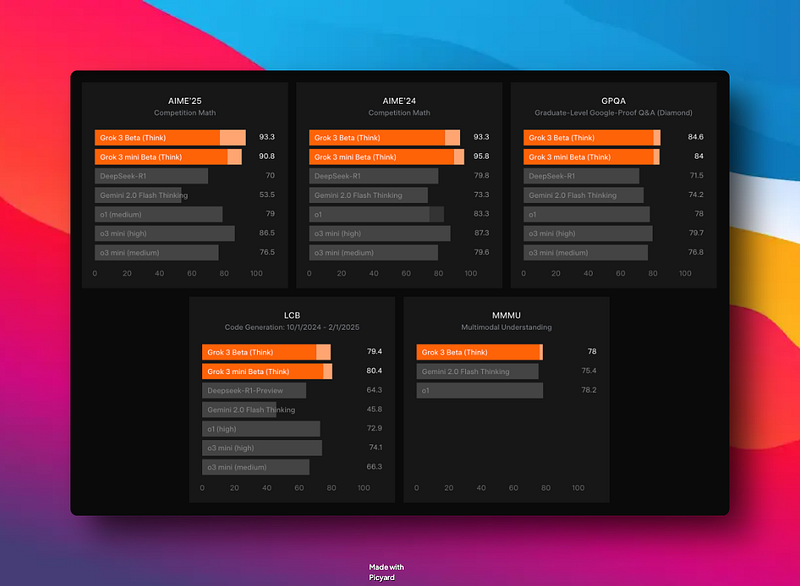
Grok tested relevant models on the 2025 American Invitational Mathematics Examination (AIME),
Common Features and Differences
The explosion of these models comes from key innovations. First, multimodal AI has become the norm. Beyond just text processing, models like GPT-4o and Gemini 2.5 Pro can analyze images, videos, and even audio, opening up applications in a wide range of fields, from healthcare to entertainment. Second, performance is optimized.
Models like Gemini Flash or Llama 3 use less computational resources, reducing costs and increasing accessibility, a topic that will be explored in *“Part 4: Pricing and Democratizing AI”*.
However, each model has its own strengths. GPT-4o and Gemini excel in flexibility, making them suitable for both general users and developers. Llama is ideal for custom projects, while Claude prioritizes safety. Grok, with support from X, excels at providing real-time information.
I often choose a model based on specific needs: Gemini for projects integrating with Google Cloud, GPT-4o for content creation, and Grok for analyzing data from X posts.
Impact and Challenges
The emergence of these models has accelerated the application of AI in all aspects of life. Businesses use Gemini to analyze customer data, while content creators use GPT-4o to create promotional videos. However, challenges remain. AI models can generate false information or reflect biases from training data. There is also growing interest in ethical issues, such as using AI to generate fake content, a topic that will be discussed in detail in “*Part 19: Ethics and Regulation in AI”*.
I see this race as not just about technology, but also about how we shape the future of AI. Companies are competing not just to create more powerful models, but also to build AI that is safe, easy to use, and suitable for real-world needs.
Final thought
The explosion of AI models since ChatGPT, from GPT-4o, Gemini, Llama, Claude to Grok, has pushed the boundaries of artificial intelligence, providing tools that are more powerful and versatile than ever before. This race is not just about technology, but also about how AI is changing work and life.
In *“Part 3: The Race Between the Tech Giants”*, we’ll explore the strategies of OpenAI, Google, Meta, and xAI, and how they’re shaping the future of AI.